Brand architecture under the knife
How our process is a bit like surgery

Clients who come to us with common brand architecture concerns often ask about Traina’s approach. We respond by detailing our simple, clear process, but it often comes with a caveat that most architecture projects are unique and require a semi-customized approach. The kicker: we don’t always know how we will customize the process until we’re actually in it.
In this way, undergoing a brand architecture initiative is like undergoing orthopedic surgery. There are signs that something needs fixing, and the MRI has confirmed that things are not ideal. But until your orthopedist gets in there, the procedure is a bit open-ended. It could be a quick clean-up or a major reconstruction. That’s where you rely on your doctor (or brand strategist) to determine what’s truly needed and modify the procedure based on their expertise and experience.
Our Phased Approach
Our methodology breaks down into four main steps—the first half emphasizes analysis, while the latter half identifies solutions. Below is a step-by-step summary of how we operate, so to speak.
Step 1: Audit
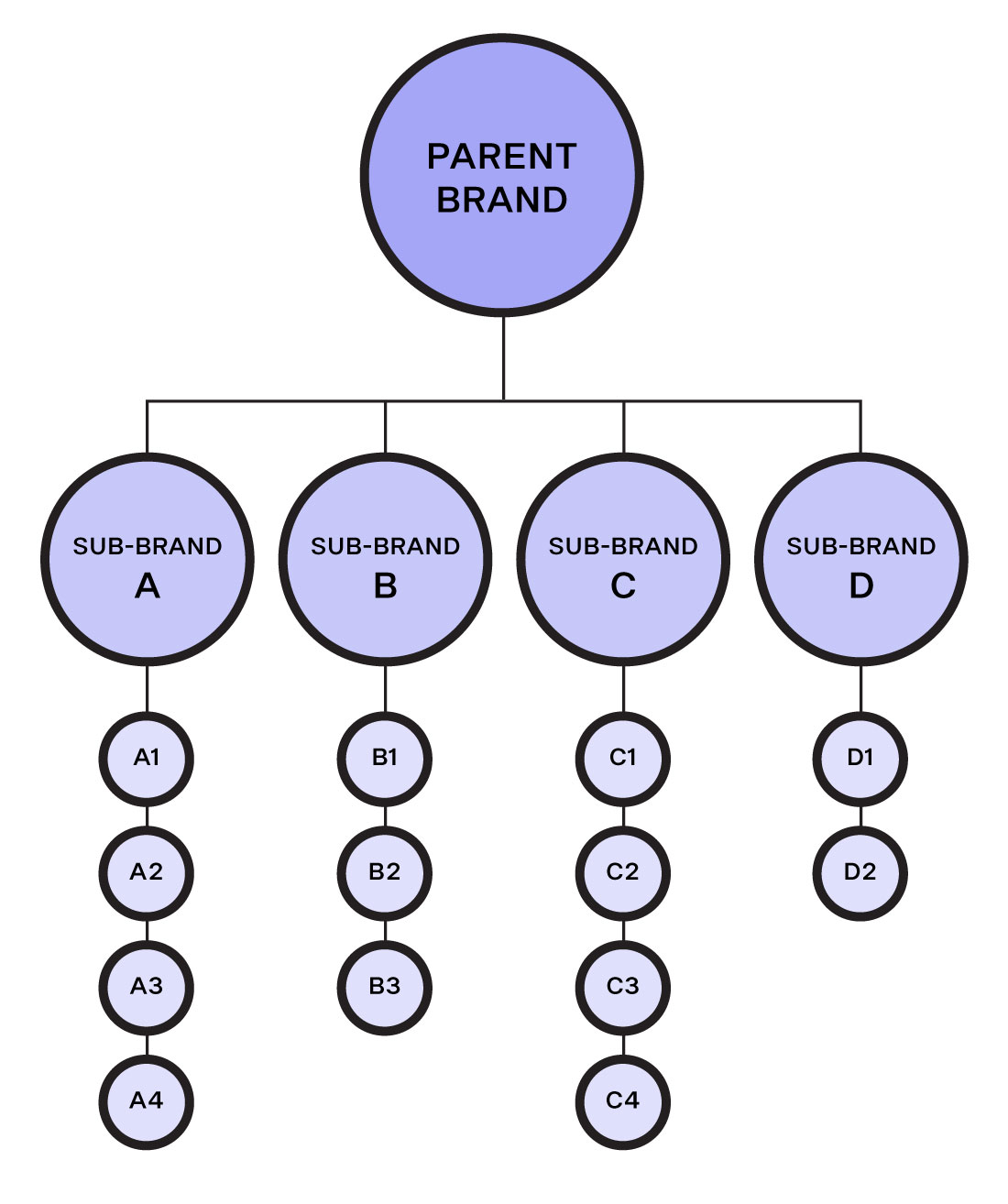
Many organizations do not have their current architecture documented, so there’s no single, accessible source of truth. We often begin by collaborating on a document that identifies all the brands, sub-brands and even partner brands in our client’s ecosystem and how they relate to each other. It’s often visualized as a tiered diagram (similar to the simplified example shown here) accompanied by notes describing the role and audience of each brand seen from a customer’s point of view.
This perspective on the entire portfolio can produce interesting insights: issues with the architecture may come into focus and unanticipated challenges may materialize. Conversely, this audit may reveal a perfectly clear organization of brands with minimal, if any, areas of concern.
In any case, completion of the audit sets the tone for the following steps.
This perspective on the entire portfolio can produce interesting insights: issues with the architecture may come into focus and unanticipated challenges may materialize.”
Step 2: Assess
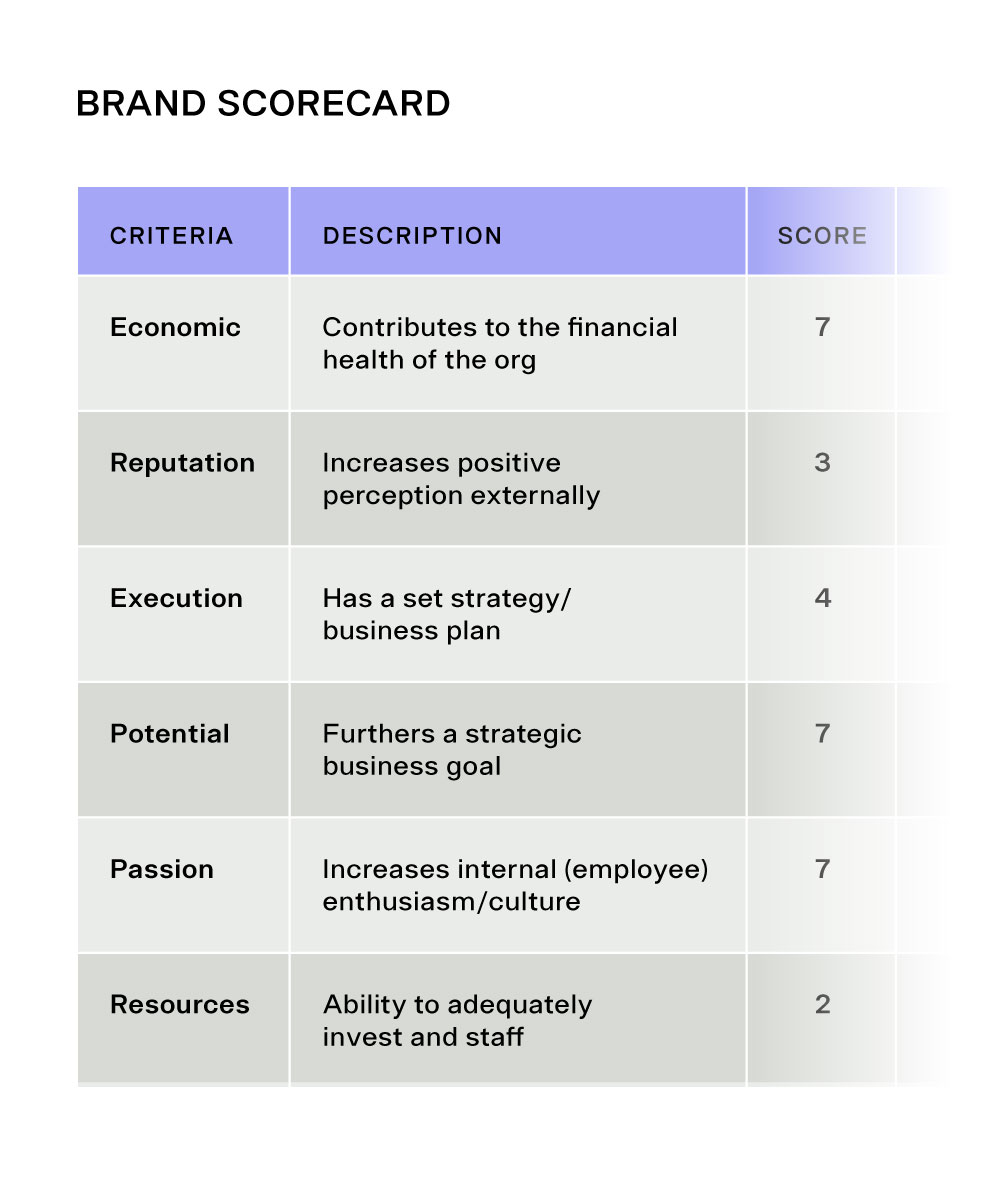
If architecture issues are identified in step one, a deeper assessment of each brand in the portfolio is the next step. Assessment is a two-part endeavor: Part one defines the means of evaluation—using an off-the-shelf framework like the growth/share matrix or via custom brand performance criteria identified by your organization (see example). This guides what information must then be captured—from quantitative sales data to qualitative opinions from brand managers. Market research in the form of brand perception or awareness studies may also be included.
Part two involves compiling the information and comparatively assessing all the brands. Just as in the audit step, results here may vary. A fairly homogenous performance may be exhibited across the portfolio, but more likely, obvious differences between brands will become apparent. Overall, this step ultimately provides a measurable assessment of the strength and importance of every brand in the portfolio.
Sign up for more Traina news, insights and updates.
By signing up to receive emails from Traina, you agree to our Privacy Policy. We treat your info responsibly. Unsubscribe anytime.
Step 3: Explore
With assessment complete, step 3 explores options for restructuring. Now that we understand the strength and importance of our brands, how do we regroup and prioritize them?
There are four industry-standard organizing models that serve as starting points: House of Brands, Branded House, Endorsed and Hybrid. The advantages and disadvantages of each are outlined fully in this article, but it’s worth noting here that many companies operate in business environments that are more complex than any one of these models can accommodate. As a result, many companies adopt the Hybrid model for its flexibility. Generally speaking, there is no single right answer as to the best model to fit your company—that’s what we help you determine.
And this is where the surgery metaphor is especially relevant. What was discovered in the audit and assessment will likely dictate several ways to arrive at a cogent brand architecture. Each solution usually contains pros and cons, so we present several options for clients to consider. As we walk through these options, we’ll outline the organizing principles that drive each structure, such as structuring brands by customer type, price, product qualities or other factors. We may earmark brands for potential renaming, recommend combining certain brands, or suggest retiring low performers. The future product roadmap is also heavily considered at this stage. And finally, how the company’s visual identity extends across the portfolio is explored in each proposed architecture solution.
Most organizations are complex enough to require a phased approach to rollout, which eases customers into your new brand architecture and allows them time to adjust to modified branding or product offerings.”
Step 4: Implement
With options provided and an ideal solution identified, we turn to implementation. Most organizations are complex enough to require a phased approach to rollout, which eases customers into your new brand architecture and allows them time to adjust to modified branding or product offerings.
A rollout that is too gradual, however, may confuse customers or employees. A logical cadence is important, and not all brands need to follow the same time horizon. Some might be immediately discontinued, others may undergo rapid migration, and some need a gradual transition to their updated state within the architecture. Other brands may not change at all.
To guide rollout decisions, we help our clients create an inventory of where their brands show up—from employee name badges to digital apps to invoicing forms. This helps think through the logistics of updating brand names, visual identities or positioning strategies.
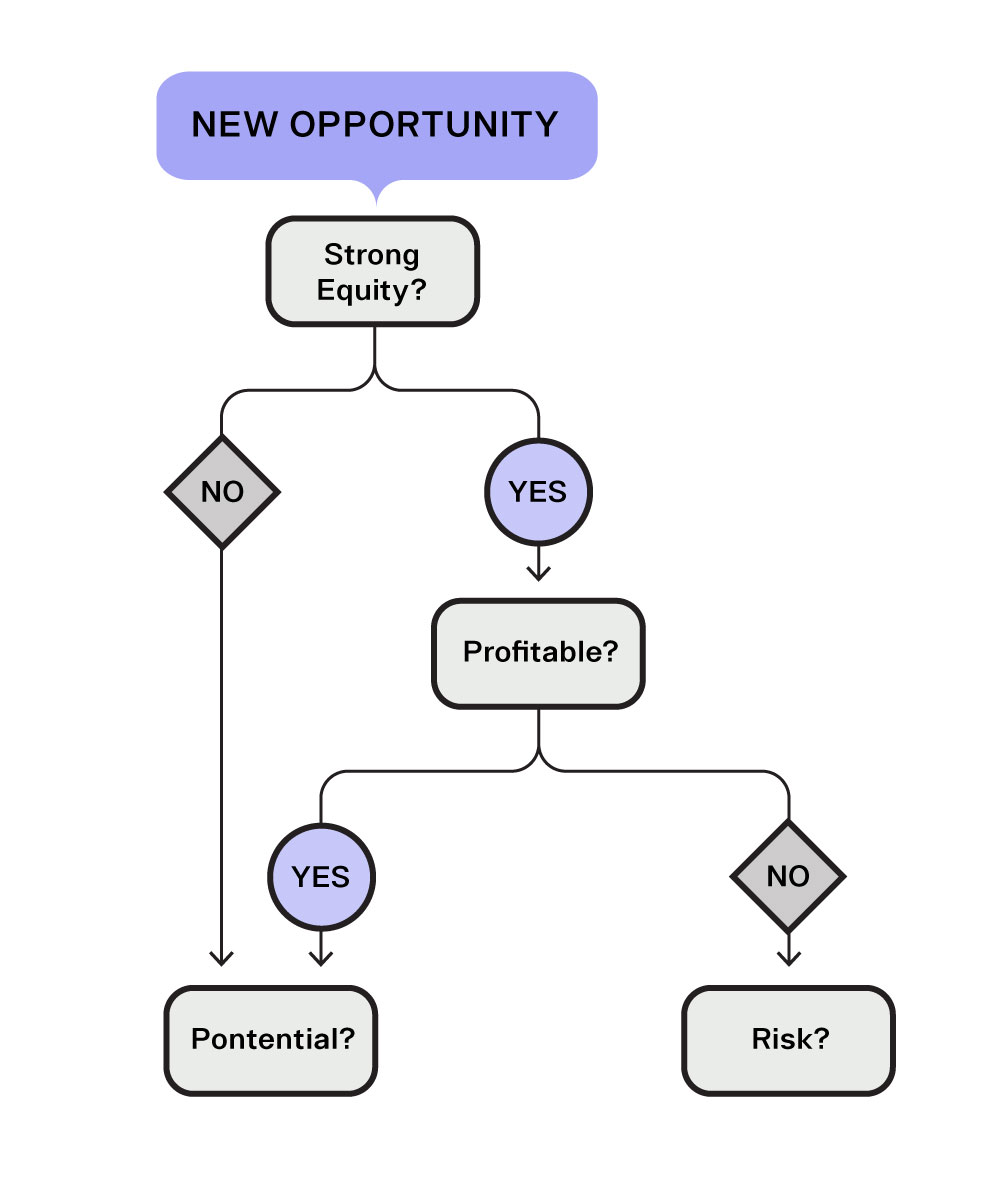
We then plot out the implementation using key milestones, assign responsibilities and hold regular status check-ins for seamless execution. As new products or acquisitions will likely be introduced to the architecture, we also develop a decision tree (see the highly simplified example) as part of our final deliverable. The decision tree ensures long-term integrity of architecture by helping you categorize new brands based on the organizing principles of the current structure.
Operation complete
These four steps to brand architecture should illustrate how our process at Traina blends best practices, customized attention and personalized action—just like any plan for a surgical procedure. It’s important to remember that regardless of what’s found under the surface, the vast majority of operations successfully accomplish what they set out to do. In the hands of a quality provider, the entire experience should be just as clear and careful as the steps outlined above. And when you wake up, your brand architecture will be as good as new in no time.