When to consider a rebrand

Five signs your brand may be holding you back

When done well, a brand’s identity makes it unique and memorable, and it communicates to the world who that brand is and what it stands for. But even the world’s most well-known and beloved brands face this undeniable reality: things change.

Perspectives, priorities, strategies, technologies, markets—they all shift in response to internal and external drivers. Sometimes a little over time. Sometimes a lot quickly. Lately, it’s been a heavy dose of the latter.

Whether those forces of change are beyond your control or self-initiated, it’s critical that you watch for signs indicating that it may be time to evolve your brand in response. Through our experience, we’ve found that there are really five key signs to watch out for.


1. Your innovation edge is being blunted by an aging brand 

Even the most incredible breakthrough technology is useless if potential customers, analysts, and stakeholders don’t perceive it as something cutting-edge from a leader in the space. Branding has everything to do with that perception.

Modernizing your brand to reflect your innovative vision will have an immeasurable impact on your company’s ability to lead. If your brand looks dated or inconsistent, so will the technology—and the company that makes it. A rebrand that better reflects your vision, mission, and leadership can elevate your technology at first glance and set you up to succeed for the duration.

Case in point: WD (formerly Western Digital)

Rewrite to focus on the storyline/setup in the previous section: When one of the world’s most recognizable technology brands decides to reinvent itself, the stakes are high. Western Digital partnered with Traina to help lead its transformation into WD—a bold evolution designed to reflect the company’s growing role in the AI-driven data economy. Together, we developed a new brand strategy, identity system, and global launch campaign that repositioned WD from a legacy storage company to a trusted infrastructure partner powering the future of AI, data, and innovation.

Click here to view the WD case study

Even the most incredible breakthrough technology is useless if potential customers, analysts, and stakeholders don’t perceive it as something cutting-edge from a leader in the space. Branding has everything to do with that perception.”

2. Your market has changed—and you need to change with it 

Markets and industries are dynamic. Significant shifts in what customers want, need, and value can leave your brand looking out of touch and irrelevant, costing you both current and potential customers.

It’s critical that you pay attention to trends and recognize when it may be time to recalibrate your brand to be in sync with where the industry is now and where it’s headed in the near future and beyond.

Keep in mind that refreshing or reinventing your brand is only half the job. Your investment in a rebrand must include a comprehensive and adequately funded activation plan that brings customers along for the journey, or all your work will be for naught.

Case in point: Legion Athletics

Rewrite to focus on the storyline/setup in the previous section: That Legion, when it came to us, had a hyper-macho brand that spoke exclusively to gym bros. But in a matter of just a few years, the weightlifting supplement market shifted dramatically, to the point where Legion’s brand was ignoring a massive swath of the target audience, which now included women. The rest of the case study intro: Legion, a high-quality fitness supplement company, came to Traina with over 40 SKUs and an audience relevance challenge. Their packaging targeted one distinct type of athlete: the gym bro. Rooted in health, premium in price, and using the purest ingredients; there was a greater health-motivated audience that lay ahead. Traina took a pointed approach: a health brand based on purity must cut through the hype and be real in every way: from what you see to what you taste and how it makes you feel.

Click here to view the Legion case study

3. Your business has outgrown the promise of your current brand 

If your business is like most, you found success in a tightly defined category where product-market fit was optimal. However, success can lead to market saturation while also attracting competitors. Extending to other related markets with different products/services is a natural next step, but your brand equity may be too narrow to do this easily.

There are many ways to approach this problem, from exploring a new name to revisiting your core ideology and positioning strategy. Sometimes, updating your visual identity and messaging is enough to reset expectations. Brands like Petco and MailChimp have repositioned themselves to reflect their companies’ evolution and expanded services.

Case in point: Trusted Tech

Rewrite to focus on the storyline/setup in the previous section: Trusted Tech was a Microsoft reseller that offered IT support on the software that it sold. As that space became increasingly competitive, Trusted Tech expanded its offerings and transforming itself into a global technology solutions provider with multiple offerings and levels of service. But that expansion was impeded by a dated brand that tied the company to its reseller roots. The rest of the case study intro: Trusted Tech, a global IT solutions provider, was experiencing a booming business that was rapidly expanding, and a dated brand that was holding it back. Together we repositioned the company as a true solutions partner, then built out a brand identity system that tells a clear story, differentiating them from their competition, and establishing Trusted Tech as the industry leader. The new brand is currently being rolled out across the company’s brand touchpoints.

Click here to view the Trusted Tech case study

4. You want to appeal to a new audience—especially a younger one 

This can be especially tricky for brands with a long history. Retro works for clothes, cars, and music. But for brands that want to stay relevant to current customers while also appealing to new generations of customers, coming off as a relic is definitely not cool.

While it may be painful to consider reimagining a brand with a legacy that’s decades in the making, rebranding can be the best way to shake an undesirable association and signal to the world that your brand is what’s now.

Remember that rebranding to attract a new audience isn’t abandoning everything the brand stands for. It’s about evolving the brand to help more people identify with its value.

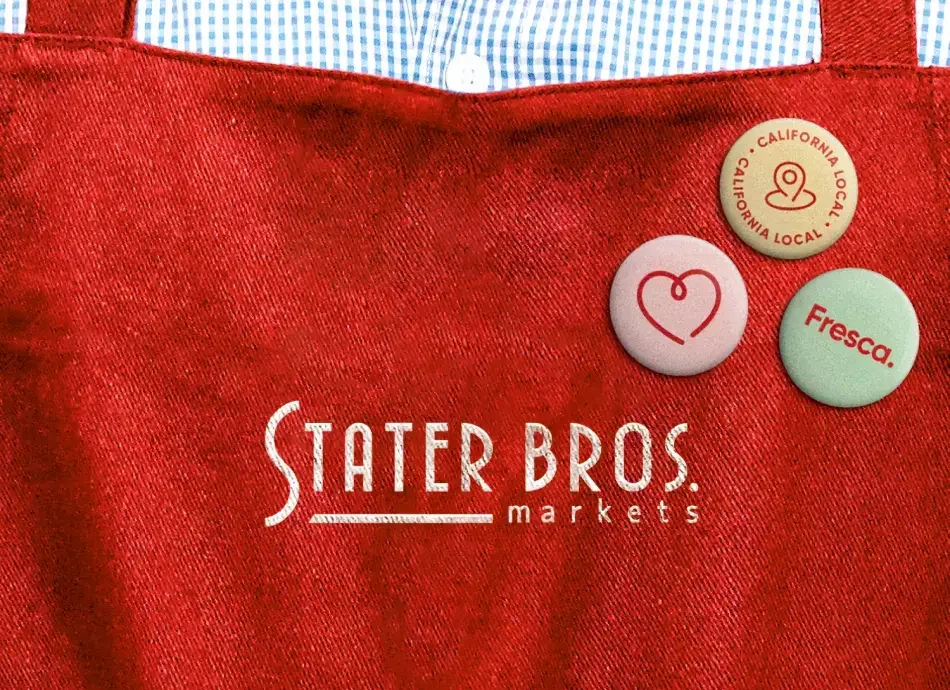
Case in point: Stater Bros. Markets

Rewrite to focus on the storyline/setup in the previous section: Stater Bros. was a legacy brand with a dated, Americana-rooted brand identity that was a disconnect for their largely hispanic market, and a complete miss with younger shoppers. Through our copmlete rebranding effort, we repositioned them to appeal directly to their ICP, and developed a brand that resonates with a new generation of shoppers. The rest of the case study intro: Over 85 years of business, the Southern California grocer Stater Bros. had become reliant on low prices and avid Americana as its primary positioning, leaving themselves open to big-box competitors and neglecting their increasingly diverse shopper community. Traina transformed Stater Bros.’ brand to evoke their true heart—community and family—then activated it with a multichannel advertising campaign across television, OTT, social, digital, OOH, radio and streaming audio.

Click here to view the Stater Bros. Markets case study

…rebranding can be the best way to shake an undesirable association and signal to the world that your brand is what’s now.

5. Consumer culture has demanded a change 

No brand, regardless of legacy, is immune to cultural shifts that can redefine what’s acceptable. These shifts can result from changes in generational perspectives, current events, long-held objections from groups whose voices are now impossible to ignore, or from a combination of triggers.

When a brand once considered innocent and endearing starts to be perceived as insensitive or tone deaf, it can have devastating business consequences. A rebrand can change the conversation.

Case in point: Camp IHC (formerly Indian Head Camp)

For Indian Head Camp—one of the country’s preeminent summer camps—it was no small thing to change a name with over 60-years of rich tradition and brand equity. Back in the 1940s, when references to native cultures were commonly applied to summer camps, the camp was named after a famous rock outcropping dubbed Indian Head along the Delaware River. But today, those references can be alienating, and the name was creating friction with the camp’s mission to ensure all people feel valued. Ultimately, it was an easy decision for this family-owned business to rebrand as Camp IHC – reshaping the meaning behind IHC to represent the brand’s values: Integrity, Honesty, and Commitment.

The new name also opened the door to expansion opportunities, including the creation of Allaway—an event management and production company that operates on the same camp property during the offseason.

Click here to view the Allaway case study

Parting thoughts 

A strategic rebrand done at the right time for the right reasons can have a huge positive impact. But make no mistake, it’s a complex undertaking that requires time, effort, budget, and buy-in from the top down. Whether you’re considering a brand facelift or a full-scale reinvention, proceed with care, patience, and an open mind.


Let’s move things forward.

Contact